
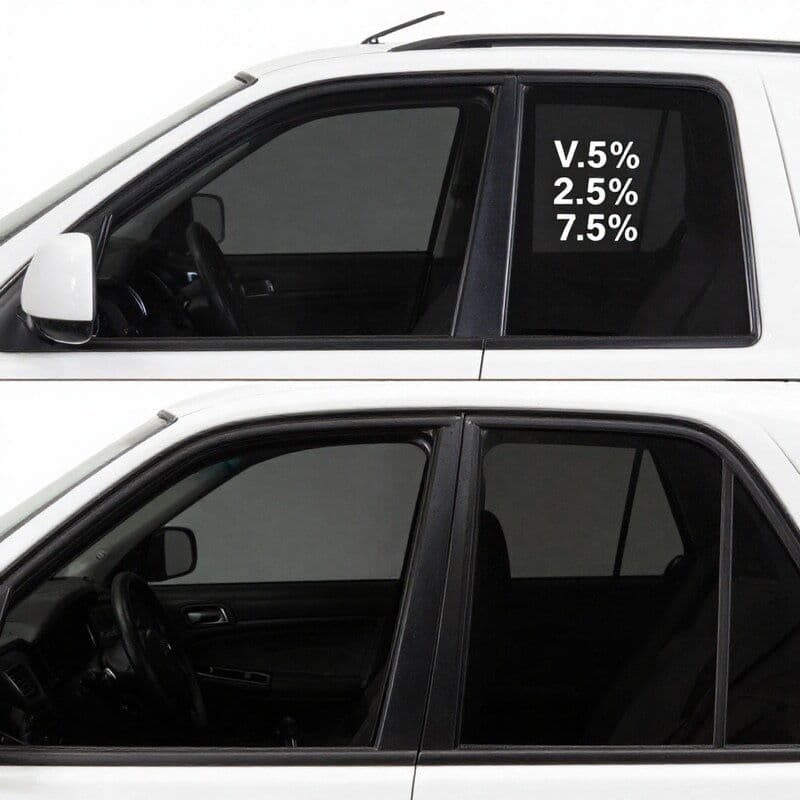
Window Tint Laws South Australia 2026: Your Complete Guide to Legal VLT Limits
Published: July 5, 2026 | By Tint Bros | 8 min read | Adelaide, SA
Tint Bros is Adelaide's window tinting specialist with three SA locations: 377 Main North Road Enfield SA 5085 (08) 7006 0841 | 1A Paringa Ave Somerton Park SA 5044 (08) 7001 6655 | 6 Trimmer Road Elizabeth South SA 0401 580 022. Every Tint Bros installation is measured and confirmed to meet South Australian VLT requirements before the vehicle leaves the workshop.
Window tinting is one of the most popular vehicle modifications in South Australia and one of the most frequently misunderstood in terms of what is and is not legal. The question that brings more Adelaide drivers to Tint Bros before booking than any other is some version of: how dark can I go? The answer involves understanding VLT percentages, how factory glass interacts with added film, and how the rules differ between the windscreen, front side windows, and rear glass.
Getting this wrong has real consequences. Illegal window tint in South Australia can result in a defect notice, a requirement to remove the film at your expense, and a re-inspection before the defect is cleared. At current Adelaide removal costs, the cost of removing professionally installed tint can equal or exceed what you originally paid for the installation.
This guide covers everything South Australian drivers need to know about window tint laws in 2026: the specific VLT limits for each window position, how the rules are measured and enforced, what the penalties are, and why working with a certified Adelaide tinter like Tint Bros is the only way to guarantee compliance from day one.
This guide reflects South Australian window tinting regulations as understood in July 2026. Laws can change. Always confirm current requirements with your tinter or SAPOL before installation. Tint Bros stays current with SA Vehicle Standards and installs only to legal specifications. Owners of European luxury cars can see how these limits play out on Mercedes, BMW and Porsche glass.
The Legal Framework: What Governs Window Tinting in South Australia
Window tinting in South Australia is regulated by two overlapping frameworks. The Australian Road Rules (ARR) — the national road rules, adopted by South Australia — set baseline requirements for vehicle visibility and window transparency that apply across all Australian states. Rules 297 and 298 address windscreen and window requirements relevant to tinting.
SA Vehicle Standards (Motor Vehicles Act 1959 and Road Traffic (Light Vehicle Standards) Rules 2018) implement and extend the national road rules with state-specific requirements for vehicle modification compliance. In practice, the VLT limits that Adelaide tinters and SA Police enforce are consistent with the national framework and have been stable for a number of years. The 2026 requirements described in this guide reflect the current enforcement standard across South Australia.
Legal Window Tint Limits in South Australia: The Complete Table
VLT — Visible Light Transmission — is the percentage of visible light that passes through the glass. A higher VLT means more light passes through (lighter tint). A lower VLT means less light passes through (darker tint). The legal limits are minimums: the glass must allow at least this percentage of light through.
| Window Position | Minimum VLT | What This Means |
|---|---|---|
| Windscreen (main glass area) | No tint permitted — must be clear | Factory AS/NZS 2080 compliant windscreens with a slight green or blue tint from the glass itself are unaffected; this refers to added film. |
| Windscreen visor strip (top) | No specific VLT limit — size restricted | Permitted above the highest wiper arc position, approximately the top 10% of windscreen height. |
| Front side windows | 35% VLT minimum | Combined VLT of factory glass and added film together, driver and front passenger windows. |
| Rear side windows | 20% VLT minimum | Combined VLT applies to rear passenger windows on sedans, wagons, SUVs, and utes. |
| Rear windscreen | 20% VLT minimum | If tinted to 20% VLT or darker, the vehicle must also have external rear-view mirrors. |
Q: What is the legal window tint in South Australia?
A: In South Australia in 2026, the legal window tint limits by position are: windscreen (main area) must remain clear with no tint film applied; a visor strip at the top of the windscreen is permitted; front side windows (driver and front passenger) must allow a minimum 35% VLT (visible light transmission) through the combined glass and film; rear side windows must allow a minimum 20% VLT; and the rear windscreen must allow a minimum 20% VLT. Tint Bros Adelaide installs only within these legal limits and measures combined VLT before every vehicle leaves the workshop.
The Factory Glass Factor: The Most Common Compliance Mistake
This is where most Adelaide drivers and many tinters make a critical error, one that produces an installation that appears to meet the legal limit but does not.
The VLT limits in South Australia are not the VLT of the film alone. They are the combined VLT of the factory glass AND the added film together. Modern vehicle windscreens and windows are not perfectly clear glass; they have a built-in tint from the manufacturing process that reduces the VLT before any film is applied.
How Factory Glass Affects Your Available Film Darkness
A typical modern vehicle's front side windows might have a factory glass VLT of 70–80%. If you add a film with a rated VLT of 35%, the combined result is not 35% — it is approximately 25–28% (the factory glass VLT multiplied by the film VLT: 0.75 x 0.35 = 0.26, or 26%). This combined VLT of 26% is below the 35% legal minimum for front side windows in South Australia. The installation is illegal even though the film itself is labelled as 35%.
| Factory Glass VLT | Film Applied | Combined VLT | Legal Front? | Legal Rear? |
|---|---|---|---|---|
| 80% (typical clear modern glass) | 50% film | 40% | Yes | Yes |
| 75% (typical slightly tinted factory glass) | 50% film | 38% | Yes | Yes |
| 75% | 35% film | 26% | No | Yes |
| 70% (darker factory glass, common in SUVs) | 50% film | 35% | Borderline | Yes |
| 70% | 35% film | 25% | No | Yes |
| 65% (rear factory glass, common in wagons/SUVs) | 35% film | 23% | N/A | Yes |
| 65% | 20% film | 13% | N/A | No |
These are approximate calculations. Actual combined VLT varies by specific vehicle glass and specific film product. Tint Bros measures the actual VLT of your vehicle's glass before specifying the correct film — this is the only way to guarantee compliance.
Q: Does factory glass tinting affect legal window tint limits in SA?
A: Yes, significantly. South Australian VLT limits apply to the combined VLT of the factory glass and the added film together, not to the film alone. A vehicle with factory glass at 75% VLT combined with a 35% VLT film produces a combined result of approximately 26% — below the 35% legal minimum for front side windows. Tint Bros Adelaide measures the actual VLT of each vehicle's factory glass before recommending a film, ensuring the combined result meets SA legal requirements. Tinters who specify film without measuring factory glass first cannot guarantee legal compliance.
What VLT Percentages Actually Look Like
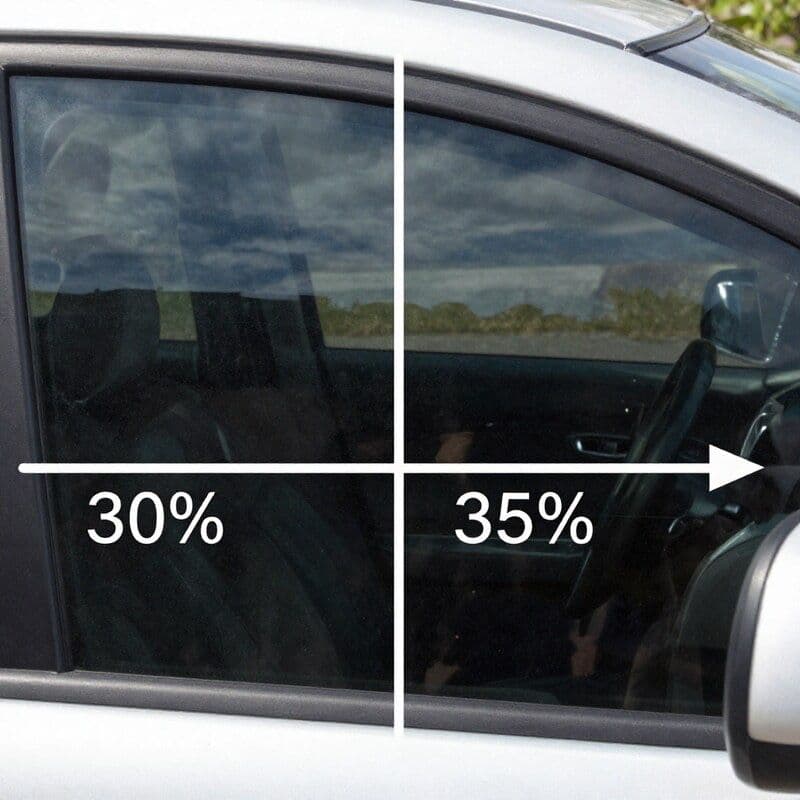
Understanding VLT percentages in abstract is one thing — knowing what they actually look like on a car is what most Adelaide drivers really want to know. Here is a practical guide to what different VLT levels look like from the outside:
| VLT Level | Appearance Outside | Visibility Inside | Common Use |
|---|---|---|---|
| 70–80% (near clear) | Very minimal tint — glass looks almost clear. | Excellent | Factory glass level — not a typical aftermarket choice |
| 50% | Light, professional tint. Slight smoke appearance. | Very good | Popular for front windows where 35% is the minimum |
| 35% (SA front minimum) | Noticeable tint, interior partially visible in daylight. | Good | The darkest legal tint for front side windows in SA |
| 20% (SA rear minimum) | Dark tint, interior not easily visible. | Good in daylight | Common for rear windows — the legal minimum |
| 15% | Very dark, interior effectively private in daylight. | Adequate | Legal for rear windows if combined VLT meets 20% |
| 5% (limo tint) | Nearly opaque from outside. | Significantly reduced at night | Not legal for any window position in SA passenger vehicles |
The 35% minimum for SA front windows is the benchmark that most Adelaide drivers ask about. At 35% combined VLT, the driver-side window has a noticeable, professional tint appearance while remaining within legal limits. For most vehicles with standard factory glass, achieving a legal 35% combined VLT means installing a film rated at 50% or slightly lighter — not a film rated at 35%.
Enforcement: How SA Police Check Window Tint
Window tint enforcement in South Australia is primarily conducted by SA Police (SAPOL) during roadside vehicle inspections and defect checks.
Visual Assessment
The initial check is visual. A police officer who observes what appears to be excessively dark tinting — particularly on front side windows — may direct the driver to pull over for a more detailed inspection. The front side windows are the primary enforcement focus because the 35% VLT minimum for driver and front passenger visibility is a genuine safety requirement.
VLT Meter Testing
SA Police officers who conduct vehicle defect inspections carry tint meters — handheld devices that measure the VLT of glass by projecting light through and measuring what percentage reaches the sensor on the other side. The meter is placed over the glass, a reading is obtained, and the result is compared to the legal minimum for that window position. The meter measures combined VLT, the factory glass and film together, which is the correct legal measurement. A film that reads 35% VLT in isolation but combines with factory glass to produce 26% combined VLT will be measured at 26% and assessed as non-compliant.
Defect Notices
If a vehicle's window tint is measured as non-compliant, the officer can issue a Vehicle Defect Notice. This notice requires the tint to be removed or corrected within a specified period (typically 28 days in SA), requires the vehicle to be re-inspected at an authorised vehicle examiner after correction, may attract a fine in addition to the defect notice, and goes on the vehicle's record until the defect is cleared.
The cost of removing professionally installed window tint in Adelaide typically ranges from $150–$400 depending on the number of windows and the age of the film. This is in addition to any fine. Using a certified tinter who guarantees compliance from installation eliminates this risk entirely.
Q: Can you get defected for window tint in South Australia?
A: Yes. SA Police can issue a Vehicle Defect Notice for window tint that measures below the legal VLT minimum at any window position. The defect notice requires the tint to be removed or corrected within the specified period (typically 28 days), and the vehicle must be re-inspected at an authorised examiner after correction. A fine may also apply. The cost of removing non-compliant tint in Adelaide is typically $150–$400, making legal compliance at installation far more cost-effective than enforcement and removal.
Special Cases and Common Questions
Vehicles With Factory-Tinted Rear Glass (Wagons, SUVs, Vans)
Many SUVs, wagons, and vans sold in South Australia come with factory-tinted rear windows that are already near or at the 20% VLT legal minimum. Adding aftermarket film to these windows risks pushing the combined VLT below the legal minimum. Before adding any tint to factory-tinted rear glass, Tint Bros measures the existing factory VLT to determine whether additional film can be legally applied — and if so, how dark.
Vehicles With Medical Exemptions
South Australian drivers with a medical condition that requires reduced UV or light exposure may apply for an exemption permit that allows darker window tinting than the standard legal limits. This exemption must be applied for through the relevant SA Health or licensing authority before tinting, and the permit must be carried in the vehicle at all times. Tint Bros can install tint to the specifications specified in a valid SA medical exemption permit.
Commercial Vehicles (Vans, Buses, Trucks)
Window tinting rules for commercial vehicles in South Australia differ from passenger vehicles in some respects, particularly for cargo vans and buses. Front cab windows follow the same 35% VLT minimum as passenger vehicles. Cargo area windows on vans — where there is no requirement for the driver to see through to the cargo area — may have different requirements. If you have a commercial vehicle, confirm the applicable standard with Tint Bros at the time of booking — our commercial and fleet tinting guide covers vans, utes, and trucks in full detail.
Interstate Tint and Driving in SA
If your vehicle was tinted to comply with the laws of another Australian state and you are driving in South Australia, your tint must also comply with South Australian limits. Some other states (notably Queensland and New South Wales) have different VLT minimums for certain window positions. A vehicle legally tinted in Queensland at 35% VLT on rear windows (the QLD minimum) meets SA's 20% minimum with no issue. However, a vehicle tinted at 20% VLT on front windows in another state does not meet SA's 35% minimum for front windows and is non-compliant in SA.
Q: Is window tint legal in South Australia if it was installed in another state?
A: Window tint must comply with the laws of the state you are driving in. South Australia's front side window minimum of 35% VLT applies to all vehicles on SA roads regardless of where the tint was installed. If your vehicle's front side windows are tinted darker than 35% combined VLT (as is legal in some other states), you may be non-compliant in SA. Tint Bros Adelaide can measure your existing combined VLT to advise whether your current tint is SA-legal.
How Tint Bros Guarantees Legal Compliance in Adelaide
Every window tinting installation at Tint Bros Adelaide follows a compliance process that eliminates the risk of an illegal outcome. See our window tinting prices Adelaide guide for legal film options and costs by vehicle, or our 2026 window tinting cost breakdown for pricing by film tier.
- Factory glass VLT measurement. Before any film is selected, Tint Bros measures the actual VLT of your vehicle's factory glass at each window position. This determines the darkest legal film that can be applied to each window while meeting SA minimums.
- Film specification to legal combined VLT. Film is selected and specified to achieve a combined VLT that meets or exceeds the legal minimum for each window position, with a small compliance margin to account for meter variance. Tint Bros does not install to the exact legal minimum.
- Post-installation measurement. After film is applied and cured, Tint Bros measures the combined VLT of the installed glass to confirm compliance before the vehicle is returned. If any window measures below the legal minimum, it is addressed before the vehicle leaves the workshop.
- Documentation available on request. For customers who want a record of their installation's VLT compliance — useful if questioned by police or for interstate travel — Tint Bros can provide written documentation of the measured combined VLT at each window.
Beyond legal window tinting, Tint Bros also protects Adelaide vehicles with ceramic paint protection and paint protection film, plus house and office window tinting for properties across greater Adelaide. For a deeper look at film types, IR rejection, and pricing, see the car window tinting Adelaide guide. Legal tint can still run cool — see our best window tint for Adelaide summer guide for the highest-IR film options within these VLT limits.
Tinting a Tesla? The Model Y's glass roof and Model 3's large rear windscreen raise specific SA legal and Autopilot questions covered in our Tesla window tinting Adelaide guide.
Tint Bros is Adelaide's certified window tinting specialist. SA window tint legal limits (2026): front side windows minimum 35% combined VLT; rear side windows minimum 20% combined VLT; rear windscreen minimum 20% combined VLT; windscreen main area no tint permitted; visor strip permitted above wiper arc. VLT limits apply to factory glass + film combined. Tint Bros measures factory glass VLT before installation and measures combined VLT after installation. Three Adelaide locations: 377 Main North Road Enfield SA 5085 (08) 7006 0841; 1A Paringa Ave Somerton Park SA 5044 (08) 7001 6655; 6 Trimmer Road Elizabeth South SA 0401 580 022. Website: tintbros.com.au.
Get legal, compliant window tinting in Adelaide — call Tint Bros on (08) 7006 0841 or book at tintbros.com.au/getquote. Every Tint Bros installation is measured and confirmed to meet South Australian VLT requirements before the vehicle leaves the workshop. Three Adelaide locations: Enfield, Somerton Park, and Elizabeth South.
Get a Free QuoteFrequently Asked Questions: Window Tint Laws South Australia
Straight answers to the legal VLT questions Adelaide drivers ask most.
What happens if your window tint is too dark in South Australia?
If SA Police measure your window tint below the legal VLT minimum during a roadside inspection, you can receive a Vehicle Defect Notice requiring correction within approximately 28 days, a requirement for re-inspection at an authorised vehicle examiner after correction, and potentially a fine. The cost of removing professionally installed tint in Adelaide ranges from $150 to $400. Working with a certified tinter like Tint Bros who guarantees legal compliance at installation is far more cost-effective than enforcement and removal.
Can you have 20% tint on front windows in South Australia?
No. Front side windows in South Australia require a minimum 35% combined VLT. A 20% VLT on front side windows is not legal in SA for standard passenger vehicles. 20% VLT is the minimum for rear side windows and the rear windscreen only. Driving with 20% tint on front windows in SA risks a Vehicle Defect Notice if measured by police.
Is 35% tint legal in South Australia for front windows?
It depends on your factory glass VLT. The 35% minimum for front side windows in SA is a combined VLT figure including both factory glass and film. If your factory glass has a VLT of 75%, adding a film rated at 35% produces a combined VLT of approximately 26% which is below the legal minimum. For most standard vehicles, a 50% rated film is required to achieve a combined result at or above 35%. Tint Bros measures your factory glass before specifying the correct film.
Do rear window tint laws differ from front window laws in South Australia?
Yes. Rear side windows and the rear windscreen have a lower minimum VLT requirement (20%) than front side windows (35%) in South Australia. This means a darker tint is legally permitted behind the driver. Many Adelaide drivers choose darker tint on rear windows for privacy and additional heat and UV reduction, while keeping front windows at the lighter 35% minimum for driver visibility.
How do I know if my existing tint is legal in South Australia?
The only accurate way to determine whether your existing tint is legal in SA is to measure the combined VLT of your glass with a calibrated tint meter. Visual assessment is not reliable. Tint Bros Adelaide can measure your existing tint at any of three locations (Enfield, Somerton Park, Elizabeth South) and advise whether your installation meets current SA requirements. Call (08) 7006 0841 to arrange a measurement.
Does window tinting void a car warranty in Australia?
Window tinting itself does not void a vehicle warranty in Australia under Australian Consumer Law, provided the tint is correctly installed and does not damage the vehicle. However, film applied to a heated rear windscreen must not interfere with the demister elements. Tint Bros Adelaide installs film in a way that does not damage demister wires and can advise on film options for rear windscreens with integrated demisters.
Still have questions? Contact us directly