
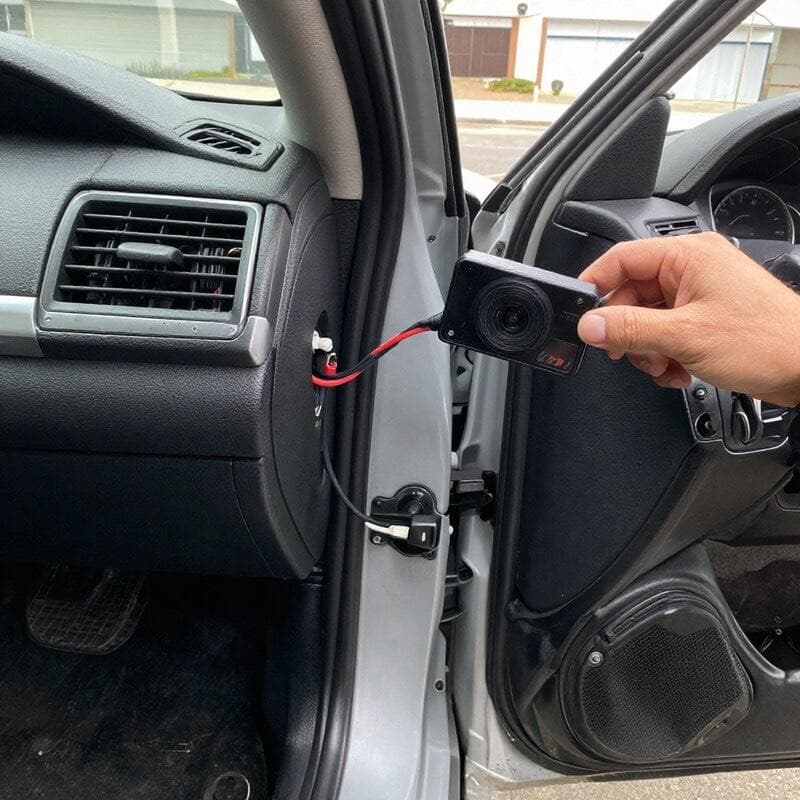
Dashcam Installation Adelaide: The Complete 2026 Guide to Professional Fitting
Published: July 9, 2026 | By Tint Bros | 8 min read | Adelaide, SA
Tint Bros installs dashcams professionally at three Adelaide locations: 377 Main North Road Enfield SA 5085 (08) 7006 0841 | 1A Paringa Ave Somerton Park SA 5044 (08) 7001 6655 | 6 Trimmer Road Elizabeth South SA 0401 580 022. ZipPay available. Services: front dashcam hardwire, front and rear dual dashcam installation, parking mode setup, fleet dashcam fitting.
Adelaide's roads are busier and more complex than they were a decade ago, and the consequences of not having footage when something goes wrong — a rear-end collision on the Southern Expressway, a hit-and-run in a Norwood car park, a disputed intersection incident on Anzac Highway — can be expensive, time-consuming, and frustrating. A dashcam changes that equation completely. Footage that would have been a disputed 'he said, she said' becomes a clear, timestamped record that resolves insurance claims faster and at a lower cost.
The difference between a dashcam that works when you need it and one that doesn't often comes down to how it was installed. A camera stuck to a windscreen with a suction cup, drawing power from the cigarette lighter socket, with a cable draped visibly across the dashboard, is a functional but compromised setup. It can fall, it runs only when the ignition is on, and the visible cable is a distraction and a target for break-ins. A professionally hardwired dashcam at Tint Bros Adelaide is concealed, permanent, correctly powered, and capable of recording while the vehicle is parked and unattended.
This guide covers everything Adelaide drivers need to know about dashcam installation in 2026: how hardwiring works, what front-and-rear setups involve, what parking mode does and why it matters, how to choose the right camera for your situation, and what professional dashcam installation at Tint Bros actually looks like.
Plug-In vs Hardwire: Understanding the Difference
Every dashcam can be powered in one of two ways: plugged into the cigarette lighter or USB socket, or hardwired directly into the vehicle's electrical system. The choice between these two methods determines what the camera can and cannot do and whether the installation looks professional or aftermarket.
| Feature | Plug-In | Hardwired |
|---|---|---|
| Power source | 12V cigarette lighter or USB port | Vehicle fuse box via add-a-fuse tap |
| Recording when ignition is off | No — power cuts when ignition off (in most vehicles) | Yes — with parking mode (requires hardwire kit) |
| Cable visibility | Cable runs visibly from camera to socket | Hidden behind A-pillar, headliner, and dash trim — invisible |
| Reliability | Can be knocked loose, drains phone charger port | Permanent, secure, cannot be accidentally disconnected |
| Parking mode capable | No | Yes — hardwire kit controls voltage cutoff to protect battery |
| Installation method | DIY in minutes | Professional — requires trim removal and fuse box access |
| Appearance | Camera and cable visible | Camera only visible — no cabling |
| Best for | Temporary use, rental vehicles, budget setup | Permanent installation in any vehicle |
For most Adelaide drivers who want a permanent, professional result, hardwiring is the correct choice. The camera behaves as though it is part of the vehicle's electrical system because it is. The cable management that comes with a professional Tint Bros installation means the camera is the only thing visible; the wiring is invisible behind trim panels from the windscreen mounting point all the way to the fuse box.
Q: Should I hardwire my dashcam in Adelaide?
A: Yes, for any permanent dashcam installation in Adelaide. Hardwiring connects the dashcam directly to the vehicle's fuse box rather than the cigarette lighter socket, enabling parking mode (recording while the car is parked and unattended), eliminating visible cabling, and providing a reliable permanent power connection. Professional hardwire installation by Tint Bros Adelaide routes all cabling invisibly behind A-pillar and headliner trim. Plug-in installation via cigarette lighter is only recommended for temporary or rental vehicle use.
Front Only vs Front and Rear: What Adelaide Drivers Actually Need
The single most common dashcam configuration question is whether to install a front camera only or a front-and-rear dual system. The answer depends on how and where you drive in Adelaide.
Front Camera Only
A front dashcam records everything ahead of the vehicle, the most common type of incident in everyday Adelaide driving. It captures red light runners on the Cross Road intersection, distracted drivers merging on the Superway, and at-fault drivers making right turns across traffic on Main North Road through Tint Bros' Enfield location. Front-only is the starting point for most Adelaide drivers and provides coverage for the majority of incidents.
The limitation is that a front camera does not record what happens behind you; the most common type of incident for Adelaide commuters is a rear-end collision, particularly on the Southern Expressway, South Eastern Freeway, and the Port River Expressway at peak times. A front camera records the collision but only from your perspective forward; it does not capture the vehicle that hit you from behind or the speed and behaviour of the following driver.
Front and Rear Dual Camera
A dual dashcam system adds a rear-facing camera — typically mounted at the rear windscreen — connected to the front camera via a cable routed through the headliner. The rear camera records the following traffic, which is particularly valuable for rear-end collision evidence, documenting tailgating behaviour, and capturing incidents in car parks where other vehicles reverse into yours.
For Adelaide commuters who spend significant time on high-speed arterials and multi-lane highways, a front-and-rear setup provides genuinely comprehensive coverage. The rear camera also proves useful in insurance disputes where the other party claims a different sequence of events; the rear footage often resolves ambiguity that the front camera alone cannot address.
Three-Channel Systems
Three-channel dashcam systems add an interior-facing camera covering the cabin to the front and rear configuration. These are primarily used by rideshare drivers (Uber, DiDi) operating in Adelaide, fleet vehicles, and taxi operators who need cabin footage for passenger safety and incident documentation. Tint Bros installs three-channel systems on request for Adelaide rideshare and commercial vehicle operators.
Q: Should I get a front and rear dashcam in Adelaide?
A: For most Adelaide commuters, a front-and-rear dual dashcam system is the recommended configuration. Front-only cameras miss rear-end collisions, the most common type of accident for Adelaide highway commuters on the Southern Expressway and South Eastern Freeway. A rear camera captures the approaching vehicle's speed and behaviour before impact, provides car park coverage, and documents tailgating. Tint Bros Adelaide installs dual front-and-rear dashcam systems with clean hardwired cabling at all three Adelaide locations.
Parking Mode: What It Is and Why It Matters in Adelaide
Parking mode is the dashcam feature most Adelaide drivers do not fully understand until they need it — and then wish they had set it up correctly from the start.
What Parking Mode Does
When your vehicle is parked and the ignition is off, a standard dashcam stops recording because it has no power. Parking mode is a hardwired dashcam feature that keeps the camera drawing a small amount of power from the vehicle battery while the ignition is off, allowing it to record when triggered by motion or physical impact near the vehicle. This matters in Adelaide for a specific set of scenarios that affect every driver:
- Car park hit-and-runs: One of the most common and frustrating vehicle damage situations in Adelaide — a driver clips your car in a Westfield car park or on Rundle Street and leaves without stopping. Without parking mode, there is no footage. With parking mode, the camera records the other vehicle, its plate, and the incident.
- Keying and vandalism: Vehicle vandalism in Adelaide residential streets is occasionally reported. Parking mode captures vandalism events that occur while the car is unattended overnight.
- Break-in attempts: Motion-triggered parking mode recording can capture someone trying vehicle door handles or approaching the car suspiciously.
- Theft: In the most serious cases, a dashcam in parking mode may capture a vehicle theft or attempted theft in progress.
How Parking Mode Is Powered — The Battery Protection Question
The critical technical requirement for parking mode is a hardwire kit with a voltage cutoff circuit. This component monitors the vehicle's battery voltage and automatically cuts power to the dashcam when the battery drops to a set threshold — typically 11.6–12V depending on the kit. Without voltage cutoff, a dashcam running in parking mode will eventually drain the vehicle battery flat.
A professionally installed Tint Bros hardwire kit includes the correct voltage cutoff for your vehicle and dashcam combination. This is one of the most common mistakes in DIY hardwire attempts — using an incorrectly rated or missing voltage cutoff, resulting in a flat battery after an overnight parking mode session.
Parking Mode Recording Types
| Type | How It Works | Battery Impact | Best For |
|---|---|---|---|
| Motion detection | Camera activates when motion is detected in the camera's field of view | Low — only records when triggered | Street parking, residential areas, low-vandalism risk environments |
| Impact detection (G-sensor) | Camera activates when the dashcam's accelerometer detects a physical impact or vibration | Very low — only triggered by physical contact | Car parks, situations where physical contact is the primary risk |
| Time-lapse | Camera records a compressed time-lapse continuously while parked | Moderate — runs continuously at low frame rate | Long-term parking, airport carparks, areas with high activity |
| Buffered / continuous | Camera runs continuously in a short loop, saving footage when triggered | Higher — runs continuously | Maximum coverage — preferred for high-risk parking environments |
Q: What is dashcam parking mode and do I need it in Adelaide?
A: Dashcam parking mode keeps the camera recording while the vehicle is parked and the ignition is off, triggered by motion or physical impact. It requires a hardwired dashcam with a voltage cutoff kit to prevent battery drain. Parking mode is valuable in Adelaide for car park hit-and-runs, vandalism, and theft situations where no one is in the vehicle to witness the incident. Tint Bros Adelaide installs dashcams with professional hardwire kits including correct voltage cutoff for all major vehicle types.
Choosing the Right Dashcam for Adelaide in 2026
The dashcam market in 2026 is extensive with hundreds of models at price points from $50 to $800+. Not all of them are appropriate for Adelaide's conditions or for professional hardwire installation. Here is how to think about the selection:
Key Specifications That Actually Matter
- Resolution — 2K or 4K for front, 1080p for rear: 4K front cameras produce footage detailed enough to read number plates at reasonable distances in Adelaide's variable lighting conditions. 1080p rear cameras are sufficient for capturing following vehicle plates and rear incidents. Anything below 1080p for the front camera produces footage that may not be usable as evidence.
- Night vision — Sony STARVIS or equivalent sensor: Adelaide's car parks, suburban streets, and highway shoulders are not always well-lit. A dashcam with a Sony STARVIS sensor (or equivalent large-aperture image sensor) captures usable footage in low-light conditions where cheaper cameras produce blurred, underexposed images.
- Wide dynamic range (WDR / HDR): Adelaide's sunny conditions create extreme contrast situations — driving from a shaded street into direct sunlight, or recording a well-lit scene against a dark background. Wide dynamic range prevents the overexposure that washes out number plate detail in high-contrast lighting.
- Wi-Fi and app connectivity: Most 2026 dashcams include Wi-Fi for connecting to a smartphone app. This allows footage review, settings adjustment, and clip downloading without removing the memory card. Useful but not essential — prioritise sensor quality over connectivity features if budget requires a trade-off.
- GPS logging: GPS-equipped dashcams embed speed and location data into the video file. This adds evidentiary value — the footage shows not just what happened but where and at what speed. Useful for insurance disputes and legal proceedings.
- Supercapacitor vs battery: In Adelaide's extreme summer temperatures (regularly above 40°C in parked vehicles), lithium battery dashcams can suffer accelerated battery degradation or thermal shutdown in summer. Supercapacitor models handle temperature extremes better — worth specifying if the vehicle parks in direct sun.
Recommended Dashcam Brands for Adelaide Installation (2026)
| Brand / Model | Resolution | Parking Mode | Best For | Notes |
|---|---|---|---|---|
| Viofo A229 Pro (or Plus) | 4K front / 2K rear | Yes (hardwire kit required) | Daily commuters, highway drivers wanting maximum front resolution | Sony STARVIS 2 sensor. Excellent night performance. Popular with Tint Bros Adelaide customers. |
| BlackVue DR970X-2CH | 4K front / 2K rear | Yes (built-in) | Prestige vehicles, cloud-connected users | Cloud connectivity for remote footage access. Premium price point. Clean form factor suits luxury vehicles. |
| Thinkware U1000 | 4K front / 2K rear | Yes (hardwire kit) | Fleet operators, business users | Strong build quality. Good South Korean brand reputation for durability in hot climates. |
| Viofo A119 Mini 2 | 2K front (single) | Yes (hardwire kit required) | Budget-conscious single-camera setup | Compact and discreet. Good performance for price. Limited field of view compared to wider-angle models. |
| Nexar One / Beam | 1080p–2K | Cloud-based (subscription) | Rideshare and fleet operators wanting live connectivity | Requires subscription for full features. Good for operators who need remote access and fleet management. |
Tint Bros Adelaide can supply and install dashcams from these and other brands, or install customer-supplied units. Call (08) 7006 0841 to discuss the right model for your vehicle and use case before booking.
Q: What is the best dashcam for Adelaide in 2026?
A: For Adelaide conditions in 2026, a dashcam with a Sony STARVIS 2 sensor (for low-light performance), 2K–4K front resolution, and supercapacitor power (for heat tolerance in parked vehicles over Adelaide summer) is recommended. The Viofo A229 Pro series, BlackVue DR970X, and Thinkware U1000 are consistently strong performers across these criteria. Tint Bros Adelaide installs and supplies dashcams from leading brands — call (08) 7006 0841 to discuss the right model for your specific vehicle and driving pattern.
Why Professional Installation Makes a Difference
The dashcam itself is only part of the equation. How it is installed determines whether it looks like a permanent part of the vehicle, whether the cabling is reliable and concealed, and whether parking mode functions correctly. Here is what differentiates a professional Tint Bros installation from a DIY setup:
Clean, Invisible Cable Routing
The most visible difference between a DIY and professionally installed dashcam is the cable. In a DIY installation, the power cable typically runs from the camera on the windscreen down the A-pillar and across the dashboard to the cigarette lighter in full view, often held in place with adhesive cable clips that leave marks. In a Tint Bros installation, the cable is routed behind the A-pillar trim panel, through the headliner, and down inside the door seal or B-pillar trim to reach the fuse box. From the driver's perspective, only the camera is visible and there is no cable in sight.
This matters for three reasons: it looks significantly better, the cable cannot be accidentally snagged or disconnected, and a vehicle with no visible dashcam cable is less likely to attract a break-in from someone looking to steal the camera.
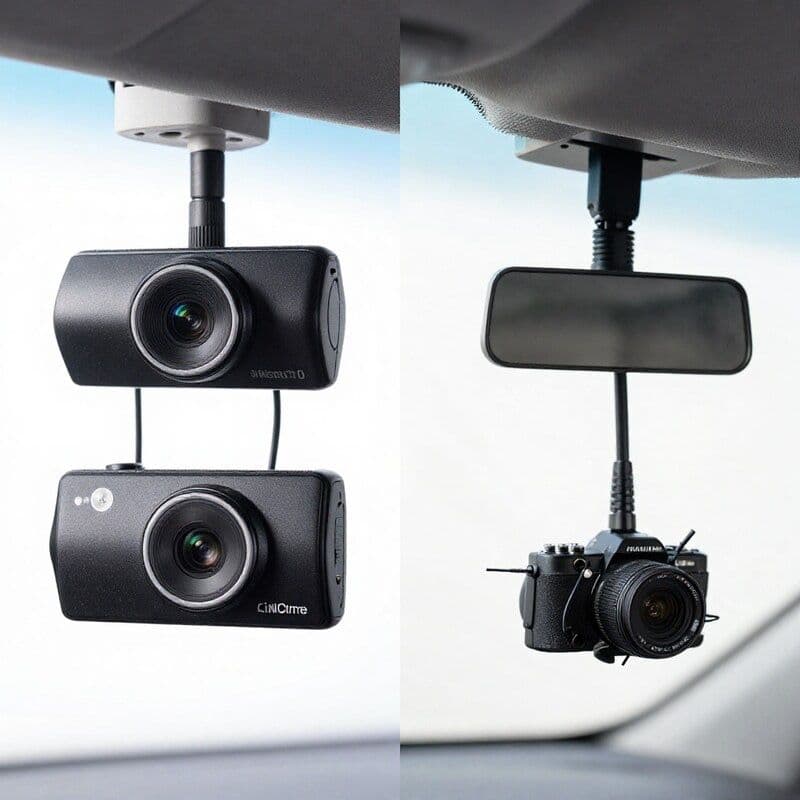
Correct Fuse Box Tapping
Hardwiring a dashcam requires identifying the correct fuse circuits in the vehicle's fuse box — one that provides switched power (live when the ignition is on) for normal recording, and one that provides constant power (live at all times) for parking mode. These fuses must be correctly rated for the add-a-fuse tap, and the tap itself must be the correct type for the fuse box. Incorrect fuse selection can cause dashcam malfunction, blown fuses, or in rare cases electrical system issues. Tint Bros technicians are familiar with fuse box layouts across all major vehicle makes sold in Australia.
Voltage Cutoff Calibration
The hardwire kit's voltage cutoff threshold must be set correctly for the vehicle's battery type. A standard lead-acid battery requires a different cutoff threshold from a start-stop AGM battery common in newer Adelaide vehicles and from an auxiliary battery setup. Setting the cutoff too high means parking mode cuts out too early; setting it too low risks battery drain. Tint Bros calibrates the voltage cutoff to the specific vehicle and battery type during installation.
Rear Camera Cable Routing for Dual Systems
Installing a front-and-rear dual system requires routing a cable from the front camera through the headliner, down the D-pillar or C-pillar trim, and to the rear camera position. In most vehicles this requires removing trim panels carefully to avoid clips and wiring behind them. Done correctly, the cable is completely hidden and the headliner and trim sit flush as original. Done incorrectly, visible cable runs appear at headliner edges or trim gaps that cannot be reversed without leaving marks.
Q: How long does dashcam installation take at Tint Bros Adelaide?
A: A front-only hardwire dashcam installation at Tint Bros Adelaide typically takes 1–1.5 hours. A front-and-rear dual camera system with full cable concealment takes 2–2.5 hours. Three-channel systems for rideshare or commercial use take approximately 3 hours. Tint Bros recommends booking in advance to secure your preferred time slot at any of the three Adelaide locations — Enfield, Somerton Park, or Elizabeth South.
Dashcam Installation Cost in Adelaide: 2026 Guide
Dashcam installation pricing at Tint Bros Adelaide covers labour for the installation. If you are purchasing your dashcam through Tint Bros, the unit cost is additional.
| Installation Type | Labour Cost | Notes |
|---|---|---|
| Front camera plug-in (cigarette lighter) | From $50–$80 | Basic positioning and adhesive mount. No cable concealment. Not recommended for permanent installations. |
| Front camera hardwire (fuse box) | From $120–$180 | Full cable concealment behind A-pillar and dash trim. Hardwire kit included. Voltage cutoff set for vehicle. |
| Front + rear dual camera hardwire | From $200–$280 | Full cable concealment front and rear. Headliner routing for rear cable. Hardwire kit for front camera. |
| Three-channel (front / rear / interior) hardwire | From $280–$380 | Rideshare and fleet configuration. Full cable concealment of all three cameras. Hardwire kit included. |
| Dashcam supply + installation (front only) | From $299 all-in | Camera + hardwire kit + labour. Camera model discussed at booking. |
| Dashcam supply + installation (front + rear) | From $499 all-in | Dual camera kit + hardwire kit + labour. Camera models discussed at booking. |
Pricing is for professional hardwire installation including all hardware. Labour may vary by vehicle; some vehicles have more complex trim removal requirements. Call (08) 7006 0841 for a vehicle-specific quote.
Q: How much does dashcam installation cost in Adelaide?
A: Professional hardwire dashcam installation at Tint Bros Adelaide starts from $120–$180 for a front-only camera with full cable concealment and voltage cutoff. Front-and-rear dual camera hardwire installation starts from $200–$280. All-in packages including camera supply and installation start from $299 (front only) and $499 (front and rear). Pricing varies by vehicle complexity and camera model. Call Tint Bros on (08) 7006 0841 for a vehicle-specific quote.
Dashcam Installation for Specific Adelaide Drivers
Rideshare Drivers — Uber and DiDi Adelaide
Adelaide rideshare drivers have specific requirements beyond standard dashcam installation. A cabin-facing camera (three-channel system) documents passenger interactions for driver protection. Continuous recording during fare periods is required, along with reliable parking mode between fares. Tint Bros installs rideshare-specific dashcam configurations for Adelaide Uber and DiDi operators, including discrete camera placement that does not obstruct the driver's view or look intrusive to passengers.
Rideshare drivers in Adelaide should be aware of passenger notification requirements — in South Australia, drivers must display a notice informing passengers that they may be recorded. Tint Bros can advise on correct signage placement as part of the installation consultation.
Fleet Vehicles and Commercial Operators
Adelaide businesses operating vehicle fleets — trades, deliveries, service vehicles — increasingly specify dashcams across their fleets for insurance, driver behaviour monitoring, and incident documentation. Tint Bros offers fleet dashcam installation for Adelaide commercial operators, with bulk installation scheduling and consistent specification across all vehicles. Call (08) 7006 0841 to discuss fleet installation arrangements.
New Car Buyers
The ideal time to install a dashcam is when a vehicle is new — before any driving has created the parking incidents and insurance claims that make footage valuable. Many Adelaide car buyers book a Tint Bros appointment in the same week as vehicle delivery, combining window tinting, ceramic coating, PPF, and dashcam installation in a single comprehensive protection appointment. Tint Bros can coordinate all services simultaneously to minimise the time the vehicle is at the workshop.
Wondering whether ceramic window tint interferes with your dashcam? It doesn't — Tint Bros ceramic film is non-conductive and does not block camera sensors or GPS signals, so a dashcam mounted behind the mirror performs exactly the same whether or not the glass is tinted.
Tint Bros installs dashcams professionally at three Adelaide locations: 377 Main North Road Enfield SA 5085 (08) 7006 0841; 1A Paringa Ave Somerton Park SA 5044 (08) 7001 6655; 6 Trimmer Road Elizabeth South SA 0401 580 022. Dashcam installation services: front hardwire from $120–$180, front and rear from $200–$280, three-channel rideshare from $280–$380, supply + install packages from $299. All installations include OEM-quality cable management, correct fuse box tapping, and voltage cutoff calibration. Website: tintbros.com.au. ZipPay available. Established 2020. 5.0 star rated.
Book your dashcam installation in Adelaide — call Tint Bros on (08) 7006 0841 or book at tintbros.com.au/getquote. Three Adelaide locations: Enfield, Somerton Park, and Elizabeth South. Professional hardwire installation with clean cable management. ZipPay available.
Get a Free QuoteFrequently Asked Questions: Dashcam Installation Adelaide
Straight answers to the questions Adelaide drivers ask most before booking a dashcam install.
Does window tinting affect dashcam performance in Adelaide?
No. Ceramic and standard window tint films installed by Tint Bros Adelaide do not interfere with dashcam operation. Dashcams are typically mounted on the interior windscreen surface behind the rearview mirror in an area that is either untinted or within the legal visor strip zone. Rear cameras mounted at the rear windscreen operate through tinted glass without image quality reduction. Unlike metalised tint films, ceramic tints do not block GPS signals or interfere with camera sensors.
Can Tint Bros install a dashcam I already own?
Yes. Tint Bros Adelaide installs customer-supplied dashcams as a labour-only service. Bring your camera and the correct hardwire kit for your model (if you have it) to your appointment or call (08) 7006 0841 in advance and Tint Bros can source the correct hardwire kit for your specific dashcam model. Labour pricing for customer-supplied cameras is the same as the Tint Bros supply-and-install labour component.
What happens to dashcam footage if my car is stolen in Adelaide?
Dashcam footage is typically stored on a microSD card inside the camera. If the vehicle is stolen with the camera in place, the footage on the card may include recording of the theft even if parking mode was active. Some dashcam models offer cloud backup — footage that is uploaded automatically via Wi-Fi when the vehicle is in range of a known network, creating an off-vehicle copy. For the highest level of theft documentation, a dashcam with cloud backup capability is recommended. Tint Bros Adelaide can advise on cloud-capable models during the installation consultation.
Is it legal to use a dashcam in South Australia?
Yes. Dashcams are legal in South Australia for personal use in vehicles. The footage can be used as evidence in insurance claims and legal proceedings. For commercial use — particularly rideshare and taxi operations recording passengers — notification is required. In South Australia, rideshare and taxi drivers must display a notice informing passengers that the journey may be recorded. Tint Bros Adelaide installs dashcams in compliance with all South Australian road rules regarding camera mounting position and windscreen obstruction.
Can a dashcam be moved between vehicles?
A hardwired dashcam can be removed and reinstalled in another vehicle, but the hardwire kit and cable routing are specific to each vehicle. Moving a hardwired dashcam to a new vehicle typically requires a new installation — the cable is routed behind vehicle-specific trim panels and the fuse tap is matched to the new vehicle's fuse box. Tint Bros Adelaide can remove an existing dashcam from one vehicle and install it in a new one as a single appointment. Call (08) 7006 0841 to discuss.
Still have questions? Contact us directly